0
Skip to Content
Smita Sharma
HOME
We Cry In Silence
The Burning Problem
The Hargila Army
Sexual slavery in Central African Republic
Rebels With A Cause
Left Behind: Pregnant girls barred from education in Kenya
Stolen Futures: Child Marriage in Nepal
Not My Shame - Sexual Violence in India
Domestic servitude trafficking in India
Inside India's crime corridor
Life in the Polka Dots
Finding Shukla
I am Arnav not Arnie
Doggie Divas
MULTIMEDIA
PUBLIC SPEAKING
BOOKSTORE
PODCAST
TEARSHEETS
NEWS
ABOUT
RESUME
CONTACT
Smita Sharma
HOME
We Cry In Silence
The Burning Problem
The Hargila Army
Sexual slavery in Central African Republic
Rebels With A Cause
Left Behind: Pregnant girls barred from education in Kenya
Stolen Futures: Child Marriage in Nepal
Not My Shame - Sexual Violence in India
Domestic servitude trafficking in India
Inside India's crime corridor
Life in the Polka Dots
Finding Shukla
I am Arnav not Arnie
Doggie Divas
MULTIMEDIA
PUBLIC SPEAKING
BOOKSTORE
PODCAST
TEARSHEETS
NEWS
ABOUT
RESUME
CONTACT
HOME
Folder: EDITORIAL
Back
We Cry In Silence
The Burning Problem
The Hargila Army
Sexual slavery in Central African Republic
Rebels With A Cause
Left Behind: Pregnant girls barred from education in Kenya
Stolen Futures: Child Marriage in Nepal
Folder: PERSONAL
Back
Not My Shame - Sexual Violence in India
Domestic servitude trafficking in India
Inside India's crime corridor
Life in the Polka Dots
Finding Shukla
I am Arnav not Arnie
Doggie Divas
MULTIMEDIA
PUBLIC SPEAKING
BOOKSTORE
PODCAST
TEARSHEETS
NEWS
ABOUT
RESUME
CONTACT
text-noburn.jpg (Copy) View fullsize
 A farmer burns paddy stubble at a field in Patran, Punjab, India. Every year around 2 million farmers across Punjab and Haryana set their fields aflame resulting in heavy smog and severe air pollution in Delhi and the neighbouring regions of Norther View fullsize
 From October through December, a thick and deadly haze hangs over New Delhi, India's capital of roughly 30 million residents. This annual crisis is rooted in seasonally slower winds, mixed with smoke emitted from coal-fired power plants and exacerba View fullsize
 Burning fields at Kanoi village, Punjab. Every year around 2 million farmers across Punjab and Haryana set their fields aflame resulting in heavy smog and severe air pollution in Delhi and the neighbouring regions of Northern India. Studies estimate View fullsize
 Varmu Singh, a landless farmer makes a living by working as a contract labourer at other people’s  farm. View fullsize
 A close up of Sardar Amar Singh’s hand with an amputated finger which he lost while working on a wheat cutting machine. Singh owns a farm less than an acre in size that gives him a modest harvest. Despite his low income, he understands the importanc View fullsize
 Gurdeep Singh, a fourth generation farmer drives a tractor during the rice harvest at his farm in Dhakraba, Punjab. Singh started using a Happy Seeder in 2017. The implement shreds old crop stubble, which eliminates the need for burning. He has seen View fullsize
 Bird's eye view of a wheat farm in Karnal, Haryana. Harvested wheat crops are bundled up to process them for threshing. India has a rain-fed agriculture. With the heatwave and lack of rain, it has affected the wheat production in the country and imp View fullsize
 Rice is processed and bagged at a grain market in Samana, Punjab. The government guarantees a minimum price for wheat and rice in case the market price dips too low. This assurance keeps many farmers tied to growing grains. India is the world’s seco View fullsize
 A worker carries a bundle of rice straw off Gurdeep Singh’s field. The straw will be used to feed livestock. View fullsize
 Sardar Amar Singh sits in his furniture workshop. He has farmed his entire life and still maintains a field that’s less than one acre. Despite his low income, he understands the importance of scientific farming methods and rents Happy Seeder and Sup View fullsize
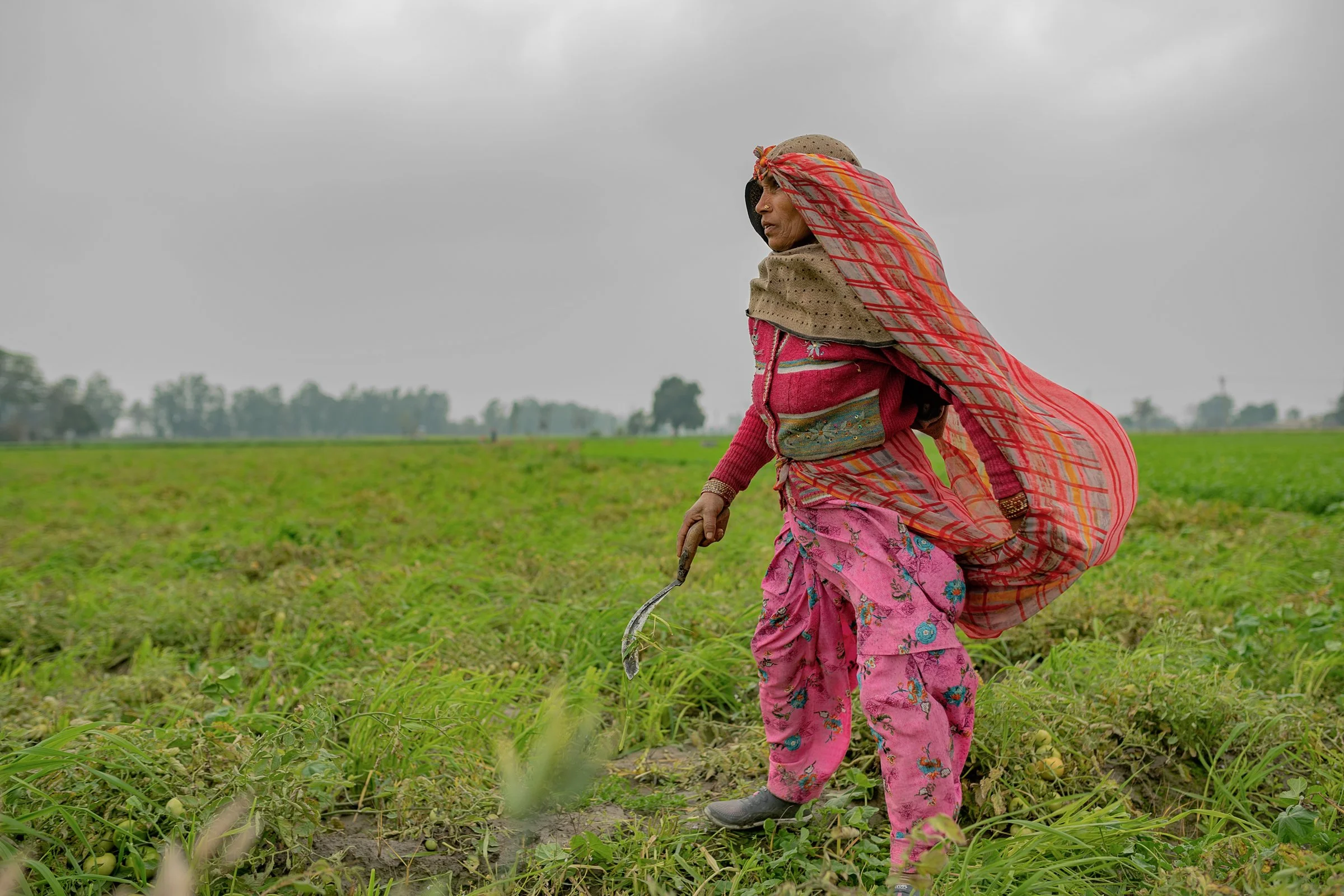
 Prakashi Devi works at a farm near Ramba village, Karnal region, Haryana. In India, agriculture is mostly associated with men, especially when it comes to decision making and running the business. Women are generally hired as farm labourers. View fullsize
 Labourers take a break from working in a rice paddy in the Karnal region of Haryana. By law, farmers must wait until the arrival of seasonal monsoons to begin planting their crops. But the paddies still require vast amounts of water pumped from well View fullsize
 Farm workers harvest tomatoes in Haryana, India. Farmers also diversify their crops beyond rice and wheat by growing fruits, vegetables and legumes because they require less water and no burning—but farms receive no price guarantees. Many farmers ar View fullsize
 Agriculture is mostly associated with men, especially when it comes to decision making and running the business. Women are generally hired as farm labourers.Amandeep has broken all the stereotypes. She grew up helping her father work in their family View fullsize
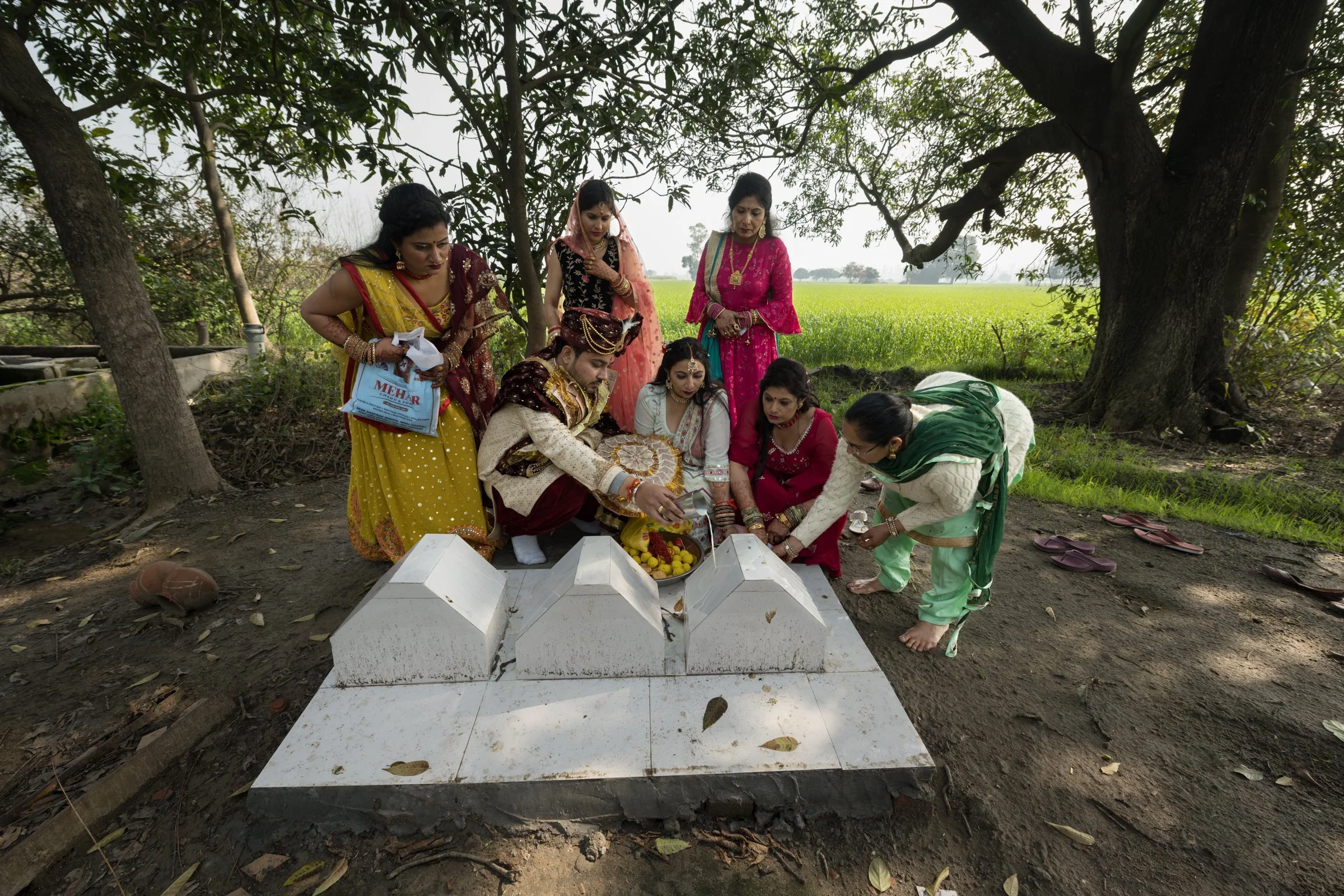
 Groom Abhisek Gandhi accompanied by relatives seek blessings from an altar of their forefathers, located at their ancestral farm near Badarpur village, Karnal region, Haryana. Abhisek is the nephew of farmer Rajesh Kumar. Rajesh is a fourth generati View fullsize
 Volunteers prepare food at the Golden Temple, Amritsar. The temple's community kitchen is the largest in the world—serving free meals 24 hours a day, all year long. The temple operates through donations of food. View fullsize
 At the Golden Temple in Amritsar, leftover roti breads are collected and will be distributed to feed livestock. The temple's community kitchen is the largest in the world—serving free meals 24 hours a day, all year long. The temple operates through View fullsize
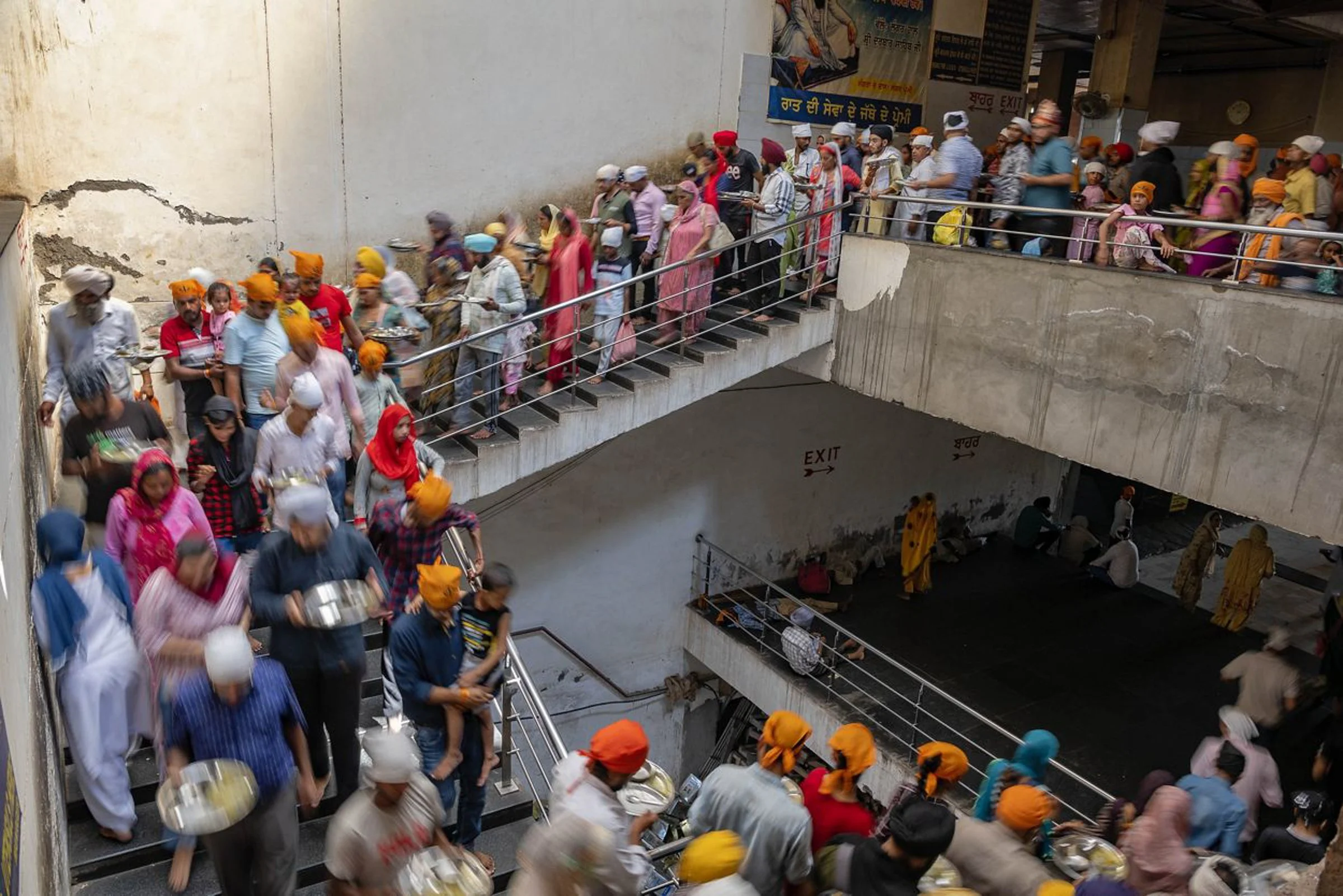
 Visitors leave with empty plates after eating at the Golden Temple in Amritsar, Punjab. The community kitchen at the temple is the largest in the world serving free meals 24 hours a day, all year long. The temple operates through donations of food. View fullsize
text-noburn.jpg (Copy)
 A farmer burns paddy stubble at a field in Patran, Punjab, India. Every year around 2 million farmers across Punjab and Haryana set their fields aflame resulting in heavy smog and severe air pollution in Delhi and the neighbouring regions of Norther
 From October through December, a thick and deadly haze hangs over New Delhi, India's capital of roughly 30 million residents. This annual crisis is rooted in seasonally slower winds, mixed with smoke emitted from coal-fired power plants and exacerba
 Burning fields at Kanoi village, Punjab. Every year around 2 million farmers across Punjab and Haryana set their fields aflame resulting in heavy smog and severe air pollution in Delhi and the neighbouring regions of Northern India. Studies estimate
 Varmu Singh, a landless farmer makes a living by working as a contract labourer at other people’s  farm.
 A close up of Sardar Amar Singh’s hand with an amputated finger which he lost while working on a wheat cutting machine. Singh owns a farm less than an acre in size that gives him a modest harvest. Despite his low income, he understands the importanc
 Gurdeep Singh, a fourth generation farmer drives a tractor during the rice harvest at his farm in Dhakraba, Punjab. Singh started using a Happy Seeder in 2017. The implement shreds old crop stubble, which eliminates the need for burning. He has seen
 Bird's eye view of a wheat farm in Karnal, Haryana. Harvested wheat crops are bundled up to process them for threshing. India has a rain-fed agriculture. With the heatwave and lack of rain, it has affected the wheat production in the country and imp
 Rice is processed and bagged at a grain market in Samana, Punjab. The government guarantees a minimum price for wheat and rice in case the market price dips too low. This assurance keeps many farmers tied to growing grains. India is the world’s seco
 A worker carries a bundle of rice straw off Gurdeep Singh’s field. The straw will be used to feed livestock.
 Sardar Amar Singh sits in his furniture workshop. He has farmed his entire life and still maintains a field that’s less than one acre. Despite his low income, he understands the importance of scientific farming methods and rents Happy Seeder and Sup
 Prakashi Devi works at a farm near Ramba village, Karnal region, Haryana. In India, agriculture is mostly associated with men, especially when it comes to decision making and running the business. Women are generally hired as farm labourers.
 Labourers take a break from working in a rice paddy in the Karnal region of Haryana. By law, farmers must wait until the arrival of seasonal monsoons to begin planting their crops. But the paddies still require vast amounts of water pumped from well
 Farm workers harvest tomatoes in Haryana, India. Farmers also diversify their crops beyond rice and wheat by growing fruits, vegetables and legumes because they require less water and no burning—but farms receive no price guarantees. Many farmers ar
 Agriculture is mostly associated with men, especially when it comes to decision making and running the business. Women are generally hired as farm labourers.Amandeep has broken all the stereotypes. She grew up helping her father work in their family
 Groom Abhisek Gandhi accompanied by relatives seek blessings from an altar of their forefathers, located at their ancestral farm near Badarpur village, Karnal region, Haryana. Abhisek is the nephew of farmer Rajesh Kumar. Rajesh is a fourth generati
 Volunteers prepare food at the Golden Temple, Amritsar. The temple's community kitchen is the largest in the world—serving free meals 24 hours a day, all year long. The temple operates through donations of food.
 At the Golden Temple in Amritsar, leftover roti breads are collected and will be distributed to feed livestock. The temple's community kitchen is the largest in the world—serving free meals 24 hours a day, all year long. The temple operates through
 Visitors leave with empty plates after eating at the Golden Temple in Amritsar, Punjab. The community kitchen at the temple is the largest in the world serving free meals 24 hours a day, all year long. The temple operates through donations of food.